Filters

Reset

Extension bars for exercise and pull-ups

Extension bars for exercise and pull-ups

Kategorie i filtry

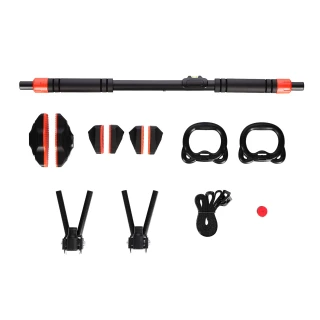
Pull-up bars are a quick way to turn your doorframe into a home workout station - with no drilling and no permanent installation. Such a pull-up bar for a doorframe allows you to perform pull-ups, overhangs and abdominal exercises in an overhang, so you can strengthen your back, shoulders, arms and grip strength even in a small flat. When choosing, the most important factors are the fit to the width of the door frame, the stable seating when installed correctly and comfort features such as non-slip feet, soft pads or a locking mechanism. In this category, it's easy to choose a model to suit your door and workout style, from simple starter variants to solutions with add-ons that help you control your set-up and exercise series.

Not only do you find strut rods in the HMS range, but you'll also find mounted rods if you prefer a permanently mounted solution. This is a good direction if you care about one fixed training area and repeatable set-up, rather than dismantling after each session. Within this group, it's also easier to select a variant for a specific location, such as a ceiling pull-up bar if you want to use the ceiling or a reinforced structure as a base for pull-up and hang training.

New

DOORWAY PULL-UP BAR WITH QUADRUPLE SUPPORT AND COUNTER DD501 HMS

New

DOORWAY PULL-UP BAR WITH QUADRUPLE SUPPORT AND COUNTER DD500 HMS

Sale
New

DOORWAY PULL-UP BAR WITH TRIPLE SUPPORT DD301 HMS

Sale
New

DOORWAY PULL-UP BAR WITH TRIPLE SUPPORT DD300 HMS

DD401 DOOR GYM BAR 98-130 CM HMS

DD400 DOOR GYM BAR 70-100 CM HMS

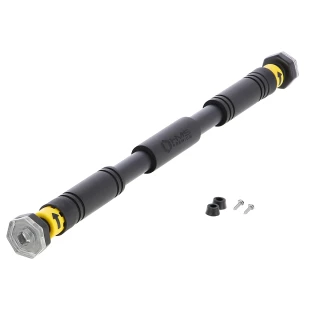
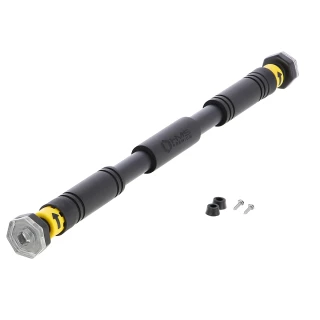
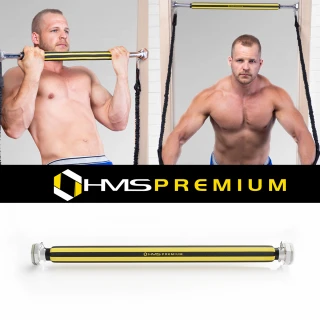
DD201 DOOR GYM BAR HMS PREMIUM

DD200 DOOR GYM BAR HMS PREMIUM

Pull-up bars - pull-up bar for doorframe without drilling

Facts at a glance (for quick selection)

Strut rods are usually mounted in the door frame - without drilling - but the prerequisite is that they match the width of the passage and have a stable mounting surface.
In this category, you will find variants differing in the range of adjustment (e.g. for standard and wider door frames) and in the support design (e.g. triple vs. quadruple support).
In some models, a repeat counter and leveller are an added benefit to facilitate correct alignment during installation.


Extension bars in the home - maximum effect in a small space

In the home, simplicity counts: the equipment should not take up any space and should be ready for training in a few minutes. That's why a doorframe pull-up bar often becomes the 'first serious' tool for back development and grip strength - especially if you don't have the space for a larger structure. A good extension bar helps you build progression in stages: from hangs and negatives, to pull-ups with a rubber band, to full reps, without replacing equipment at the start.


How do you choose a strut bar? The most important parameters

  • Fit to the doorframe (range of adjustment)

Start by measuring the width of your walkway and choose a model with a range that gives you a 'spare' adjustment, rather than working at the limit. This is the easiest way to get the pull-up bar to fit the doorframe securely and comfortably. In practice, it is the fit to the doorframe that solves most of the 'will it fit the door' and 'will it be stable' objections.

  • Stability and protection of the door frame (what "support" means)

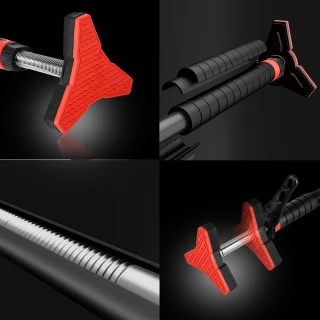
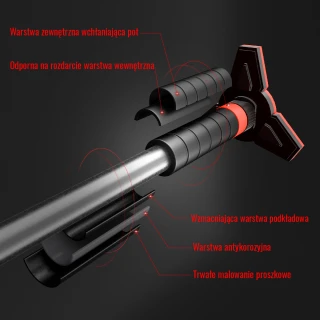
Avoid the 'slogan' choice. If you see terms like triple/fourfold support, treat them as shorthand for specifics: a larger pressure surface, non-slip feet, soft pads to reduce the risk of marks on the doorframe, and a locking mechanism to maintain alignment after installation. In descriptions and communication, it is safer to sound the direction: 'stable when installed correctly', rather than promises like 'won't fall off'.

  • Level and alignment control

If you want to reduce installation time and the risk of crooked setting, choose models with a spirit level. Level seating is not a 'detail' - it translates into overhang comfort and a sense of security when exercising. Variants with a spirit level also make it easier to do a quick check before a workout.

  • Practical extras (e.g. repetition counter)

A counter is not a substitute for technique, but it is realistically useful: it helps you control series and progression without counting "in your head", especially when you are doing circuit training or learning pull-ups in stages (overhangs, negatives, pull-ups with elastic). If such an addition makes sense for you, consider variants with a counter and simple operation.

  • Exercise plan and fitness level

If you're just starting out, choose a bar that allows you to do hangs and assistance exercises (e.g. with a rubber band) without stress. In practice, regularity builds faster on equipment that you mount confidently and quickly, rather than a model that 'requires you to combine' every session.


Mounting without drilling - straightforward in 3 steps

  • Unbolt and adjust the width to the door frame.
  • Align flush in the door frame.
  • Tighten and check the locking mechanism and do a short stability test before training.


What you can exercise on a strut bar

The most obvious is pull-ups and overhead pull-ups, but in practice, overhangs (grip and shoulder strength) and abdominal exercises in overhangs, such as knee or leg raises, are equally important. Beginners often start with overhangs, negatives and versions with resistance bands, so they build control and confidence in the movement more quickly.


Check before you buy

  • Measure the width of your mounting location and choose the correct range.
  • Only install in a stable, level and undamaged frame.
  • Check the clamping pressure, locking and stability of the fitting before each training session.
  • Avoid promises and assumptions like "it definitely won't fall off" - a safer approach is: stable with correct mounting and correct use.
  • If you plan to do dynamic exercises, do so carefully and according to the instructions - not every model is designed for this style of work.


Comparison of options - how to choose a model for the width of the walkway

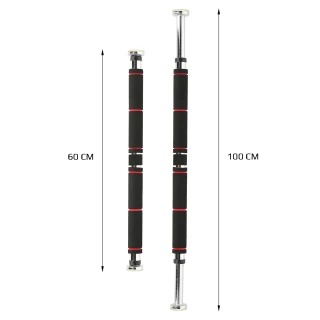
The simplest division in this category is the installation range, as this determines whether the bar will work in your frame at all. For standard passageways, 77-95 cm models are typical, and for wider passageways, 100-120 cm variants.

The second difference is the support design: triple-support models are the base for pull-ups and hangs, while quadruple-support versions (often with extras like a level and counter) are geared towards easier control of the set-up and training series. It's worth considering this as a 'for style of use' choice: if you're doing short, regular sessions and want to keep an eye on progression, additional elements like a counter can be a real help.

Finally, if in your transition the standard range is 'just right', it's more practical to go for a variant with a comfort adjustment rather than fitting a bar on the borderline setting. This is the easiest way to reduce concerns such as 'will it damage the doorframe' and 'will it be stable', as firm pressure and an even setting are key to a safe workout.


Recommended strut bars in this category

- DD300 HMS triple support pull-up bar - the choice for standard doorframes(77-95 cm) when you want a simple no-drill installation and a base for pull-ups, overhangs and abdominal exercises in the overhang. In communication, it is worth emphasising the transition fit and the elements that improve seating security (feet/pads/lock).

- DD301 HMS triple support pull-up bar - an option for wider frames(100-120 cm) when the standard range is too short. A good fit for those who want a comfortable adjustment and to train at home without a permanent installation.

- DD500 Pull-up bar with quadruple support and HMS counter - an option for people who want easier control of their workout: repetition counter + elements for easier positioning (including a spirit level) and stronger support. The 77-95 cm fitting range makes it a good choice for standard transitions, especially if you're doing short bursts, circuits or just want to keep an eye on progression without counting.

- DD501 Pull-up bar with quadruple support and HMS counter - a larger variant with a rep count for wider transitions(100-120 cm) when you want similar functions to the DD500 but need a longer mounting range.


FAQ

1) Do the strut rods require drilling?
No - their main advantage is that they can be strut mounted without drilling. However, the key is to fit the width of the doorframe and to lock the bar correctly before exercising. In practice, safety comes not from the 'password', but from correct installation and stability checks before training.

2) How do I choose a pull-up bar to fit the doorframe?
Start by measuring the width of your fitting area, and only then choose a model with a suitable adjustment range. If you're 'on the edge' of the range, it's better to choose a variant that gives a comfortable fit without extreme dithering. This is the easiest way to a stable seating and a comfortable workout.

3) Won't the bar damage the doorframe?
Soft pads and non-slip feet are supposed to help reduce the risk of scratches, but a lot depends on the surface and installation. Only install the bar in a solid, level doorframe and avoid installing on brittle or uneven surfaces. After installation, do a stability test before a full load.

4) Are strut rods good for beginners?
Yes - they are often where learning to pull up starts. Beginners can start with hangs, negatives and resistance band work and only then progress to full repetitions. This progression is safer and builds grip strength and shoulder control faster.

5) Apart from pull-ups, what exercises are worth doing on a door bar?
In addition to pull-ups, static hangs and abdominal exercises while hanging (such as knee raises) are great. You can also use the bar for simple shoulder girdle stretching after a workout. If you are just starting out, it is better to rely on controlled movements rather than dynamic 'jerking'.


Choose HMS extension bars today - adjust your workout to your home conditions.

First fit the bar to the width of your door frame and choose a design that facilitates stable seating (pads, feet, locking). If you want to keep an eye on your progress, consider variants with a counter and spirit level, as they make it easier to control the series and set up evenly. Also, plan a 'simple start' before your first workout: hangs and pull-ups with a rubber band are often the best way to get regular before you get into full reps. And when the equipment is to be used by multiple people, make it a habit to make easy adjustments and check stability before each session.